How the room affects your baby's sleep
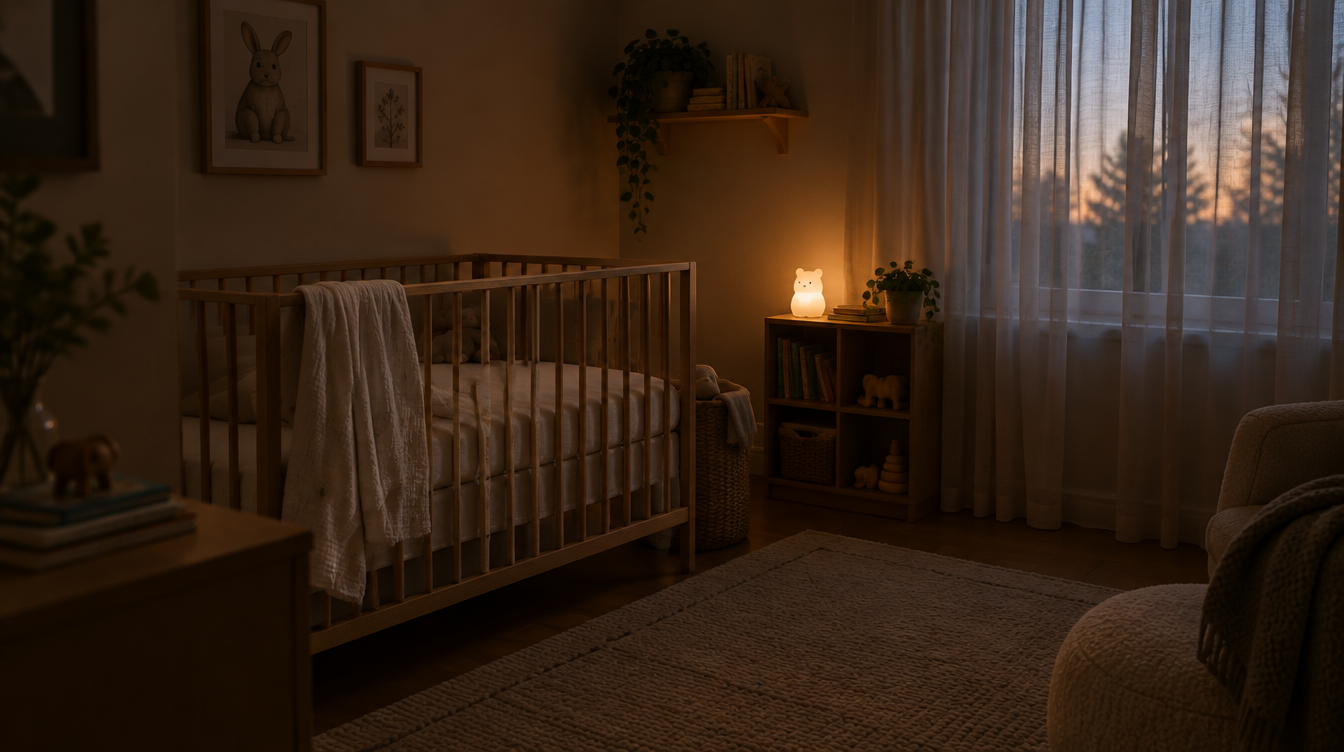
A baby does not fall asleep simply because they are tired. Light, temperature and even the texture of a fabric tell the body that it is time to sleep — or keep it awake.
Light
This is the main signal for the body clock. Daylight during the day, warm and dim in the evening. An hour before bed, switch off the ceiling light and leave the night light on.
Temperature and air
18–20 °C is the range where a baby neither sweats nor gets cold.
Airing the room before bed matters more than any humidifier.
No overheating. A hat and warm pyjamas at the same time is one layer too many.
Fabrics
Natural bedding absorbs moisture and does not feel cold to the touch. Synthetics build up static and rustle — the baby wakes from their own movement.
Sound and ritual
Complete silence is not required: steady background noise actually helps. Consistency matters more — the same steps in the same order every evening. After a week the ritual starts working on its own.
Better avoided
Bright ceiling light during a night feed.
A screen in the room within an hour of bedtime.
A new toy in bed in the evening — that is a reason to play, not to sleep.